
In the wee hours preceding dawn of the 29th of June, 3123 BCE, a Sumerian astronomer looked up at the night sky and recorded the trajectory of a large object. The object is believed to have been over a kilometer in diameter (about 11 football fields). Its impact is known as the Köfels event whose aftermath included a 900km high ejecta plume, a 500m thigh debris layer, and climate change.
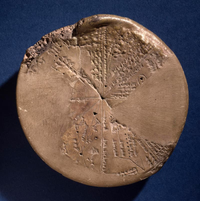
Roughly 5147 years1 later, the security cameras at a home near Charlottetown, Prince Edward Island (PEI), Canada, captured the first sight and sound of a meteor striking Earth. The footage is of substantially higher fidelity than the Cuneiform tablet. The sea of discussion, scientific research, new reports, and social media activity surrounding this event makes it irrefutable.

The Era of Perfect History is the period in human history during which every pertinent detail of even minor events would have photographic or video evidence. We are not there yet, and it’s likely that we never will.
Imagine billions of people running around with high-definition cameras that they can pull out and record at a moment’s notice. And now imagine there are dozens of social networks that reward sharing footage of any notable event with an audience of millions, and the fame and glory that come with it. This sounds exactly like where we were heading, doesn’t it?
No government would be able to lie to its citizenry. Every misstep or misstatement would be backed by irrefutable evidence. Just as the internet was supposed to bring about a perfectly informed society, with unfettered access to the truth, a history of perfect information was also supposed to bring about a just and transparent society, one where everyone can be held to the truth… eventually. However, some argue that the sheer volume of information could lead to manipulation, misinformation, and erosion of trust. The optimists’ view of perfect information bringing about a just society might overlook the complexities of human behavior and societal dynamics. Nobody planned this, but it was just the direction we were heading as a species.
The past couple of years changed many things, one of which is the irrefutability of video or photographic evidence. As of this writing, it is no longer possible to reliably tell AI-generated imagery from “authentic” imagery. (E.g.)
It is frightening how scarce reality is compared with what can be synthesized. Intuitively, it may seem to be the other way around. After all, our capacity to simulate reality is vastly inferior to reality itself. The discrepancy comes from the volume with which generative content can be injected into our discourse. While we labor for hours making squaking sounds with our throats or poking plastic with our meat sticks, generative content can spit out a million articles. As Henk van Ess says, “traditional fact-checking takes hours or days. AI misinformation generation takes minutes.”
Hoaxes and conspiracies abound, but so far we haven’t seen a substantial historical event be completely synthesized via AI. Either that or the falsehood was so perfectly executed that nobody can tell.
It would make for a great science fiction story until it actually happens.
-
… and 26 days to be exact. It is kind of incredible how people came up with such an accurate estimate. I haven’t read the book, but if anyone could have a look at chapter 4 and tell me, that would be great. In the meantime, I’ll have to take the word of the University of Bristolarrow_upward